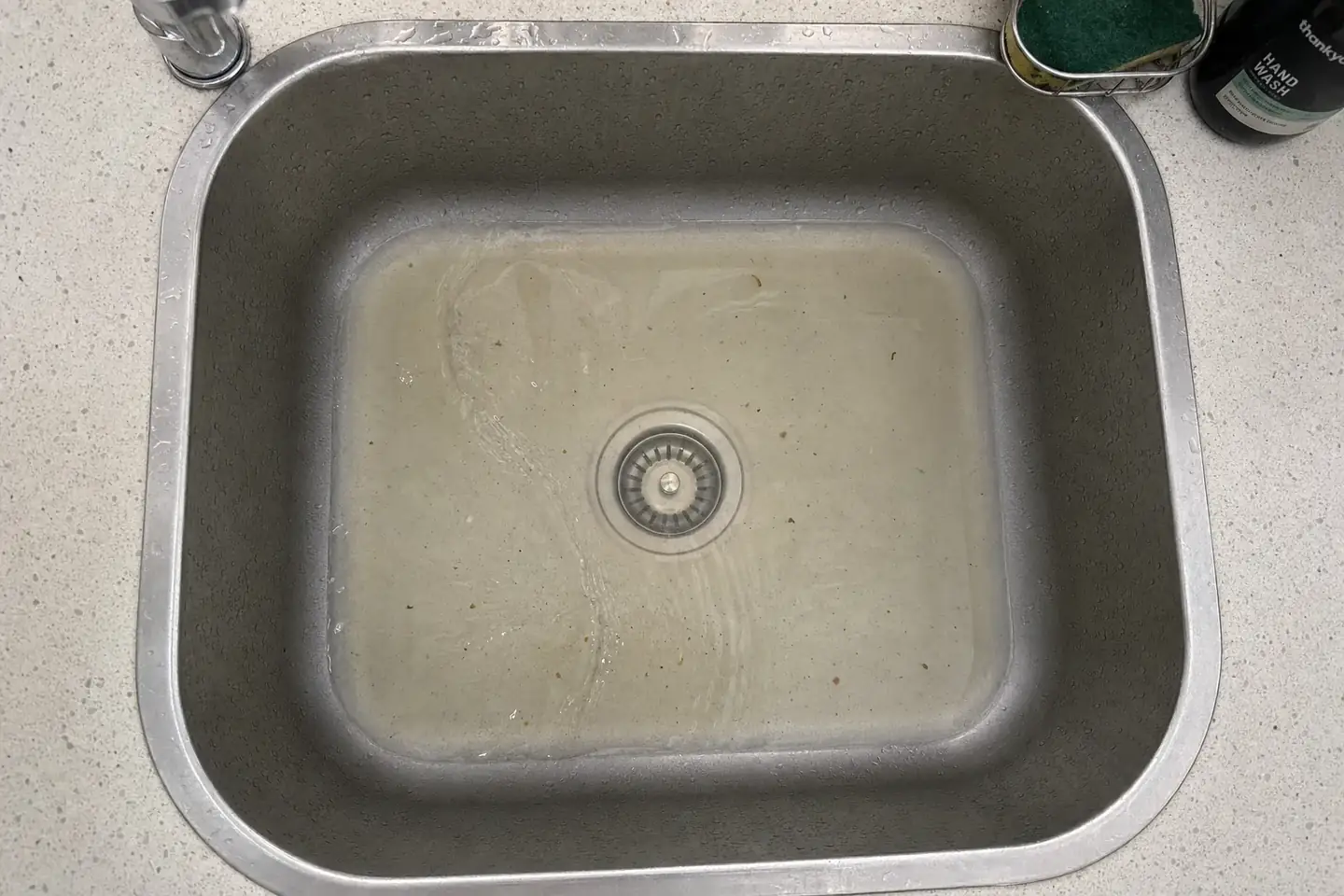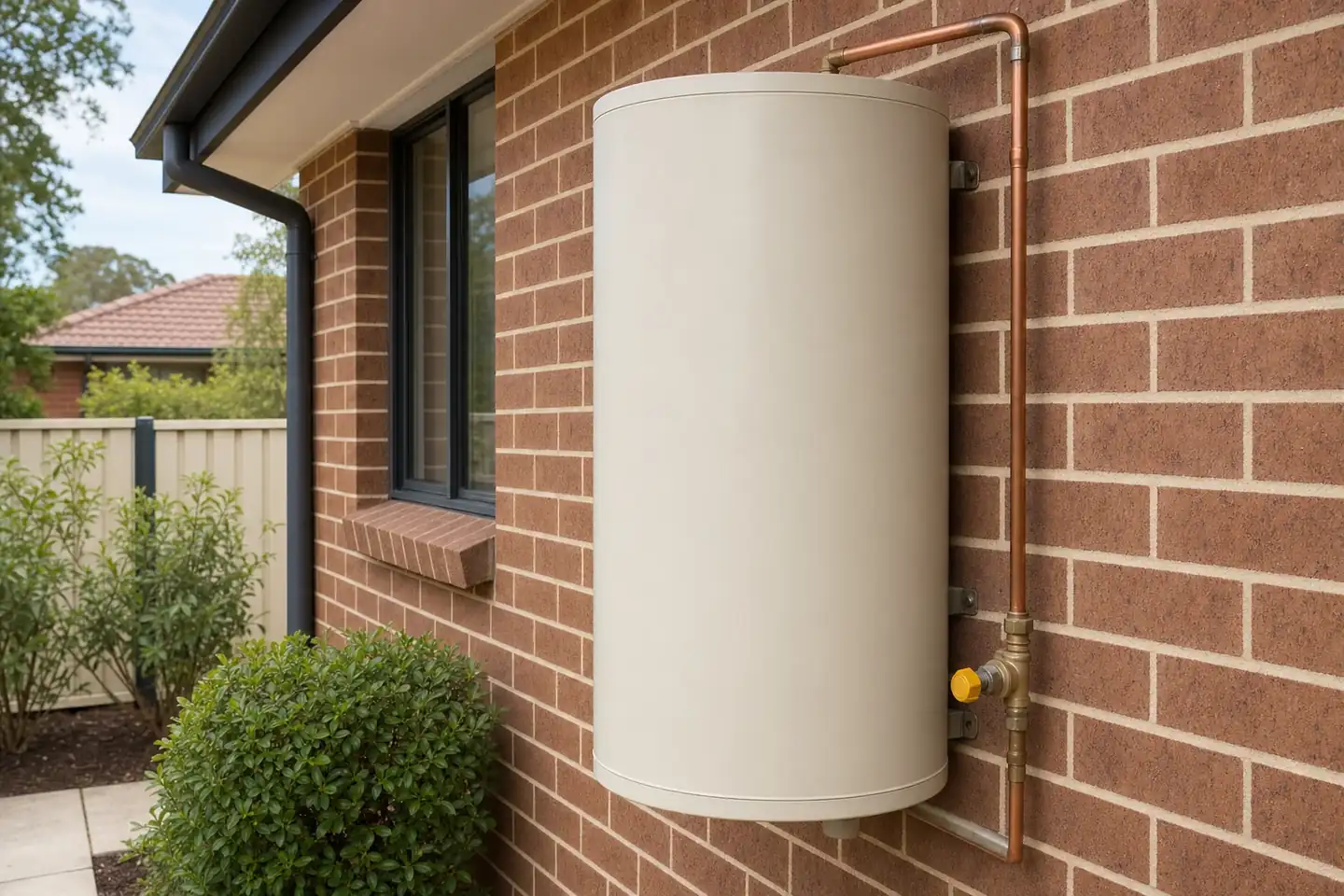
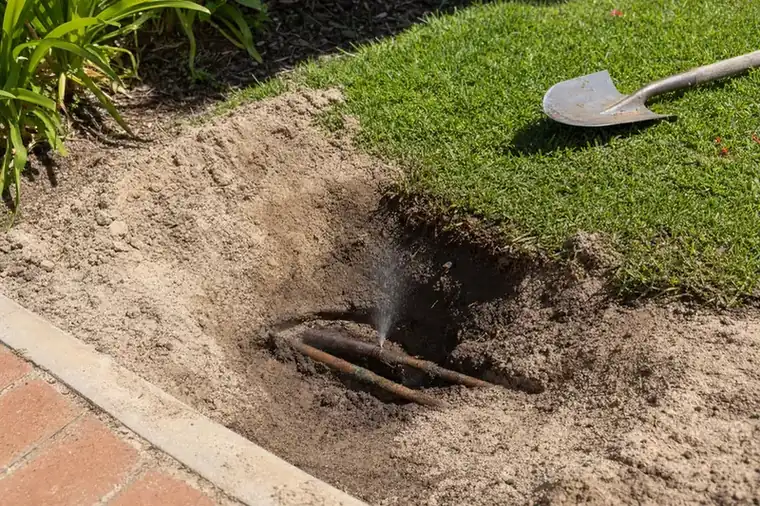
There is no single reason copper pipes are leaking in Bertram, Wellard and Leda. Pipe age, how it was put in, pressure and flow, and sometimes electrical issues all play a part. Perth's water is also on the soft side in the Tamworth Hill zone, and research links chlorine in high-pH, low-alkalinity water to copper pitting. A moving water meter with every tap off is the simplest sign of a leak.
Summarise this with AI
- Around half of Perth's drinking water now comes from the Kwinana and Binningup desalination plants
- Tamworth Hill zone water averaged a hardness of 47 mg/L in 2024-25, which the guidelines call soft
- The water is safe to drink and met the guidelines; soft water can be harder on some older metal pipes
- Pipe age, workmanship, pressure and stray current also cause copper leaks
- A water meter that moves with every tap off usually means a leak
- Ben uses Sewerin ultrasonic equipment to find leaks without digging up the yard
Ben at Frecks Plumbing & Gas has been getting a lot of calls from Bertram, Wellard and Leda for copper water pipes leaking in the ground. Underground leaks can run for months before anyone notices, and some of those jobs have been in homes that have already had more than one leak.
People often ask why this is happening so much around here. There is not just one reason. The age of the pipe, how it was put in, pressure and flow, and sometimes electrical issues all play a part. Perth's drinking water has also changed over the years.
How Perth's water has changed
For a long time Perth relied mainly on dams and groundwater. That mix has shifted. Water Corporation now says around half of Perth's drinking water comes from the seawater desalination plants at Kwinana and Binningup. In 2025-26 those two plants supplied about 44.5% of the water sourced for the metropolitan scheme.
Water straight from a desalination plant is very pure, so it is not sent into the pipes like that. Water Corporation remineralises it first, adding lime to lift the pH, alkalinity and calcium, and carbon dioxide to control pH. Chlorine is then added to all of Perth's drinking water schemes so a residual stays in the network and keeps the water safe. That treatment is normal and necessary.
Bertram, Wellard and Leda sit in Water Corporation's Tamworth Hill water quality zone. Water Corp does not publish a suburb-by-suburb blend, because it all runs through the one connected scheme.
Soft water in the Tamworth Hill zone
In 2024-25, water in the Tamworth Hill zone averaged a hardness of 47 mg/L, an alkalinity of 44 mg/L as calcium carbonate, and a pH of 8.11.
The Australian Drinking Water Guidelines, as quoted in Water Corporation's own report, describe hardness below 60 mg/L as "soft and possibly corrosive", depending on pH, alkalinity and dissolved oxygen. That wording is a caution, not a finding that the water is unsafe or outside the guidelines. The pH was within the recommended 6.5 to 8.5 range, and the other aesthetic results met the guidelines. The water is safe to drink. It is simply on the soft side, which can be harder on some older metal pipes.
What the research says about chlorine and copper
Chlorine is added to keep drinking water safe. There is also peer-reviewed research showing that free chlorine, in water that is high in pH and low in alkalinity, can contribute to pitting in copper pipes. In laboratory and pipe-loop tests, that combination has caused pinhole leaks, especially where water is flowing continuously, such as in some hot water lines.
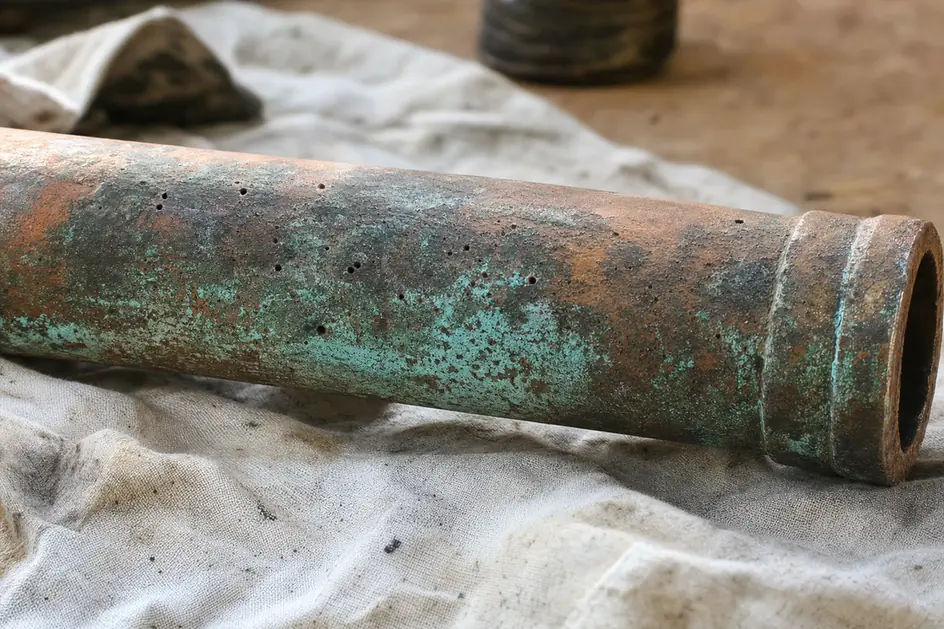
That research was not done on Perth taps, and it does not prove that chlorine or desalinated water is why a particular pipe in Bertram, Wellard or Leda has failed. It is one factor worth knowing about, not the whole story.
Other reasons copper pipes fail
Desalinated water has only been part of Perth's supply since 2006. Researchers were already looking at copper corrosion in Perth's mains water in the 1980s, two decades before the Kwinana plant started. So this is not a new, desal-only problem.
Other causes we see on the job include the age of the copper, joints that were not done quite right when the house was built, high pressure or fast-moving water, and, in some cases, poor earthing or stray current. One pinhole leak does not mean all the copper in the house is finished. Several leaks on the same line is a different conversation.
Signs of a leak, and a simple test you can do
Underground leaks often give little away at first. Watch for a water bill that jumps with no change in how you use water, the meter still moving when every tap is off, a damp or unusually green patch in the garden, or running water when nothing is on.
Water Corporation has a simple leak test you can do yourself:
- Turn off every tap and anything that uses water, inside and out.
- Find your water meter, usually in the front garden near the verge.
- Write down the 3 red numbers.
- Wait 15 minutes without using any water.
- Check the red numbers again. If they have moved, you probably have a leak.
If you have a smart meter, the check is even simpler. With everything off, if the meter shows more than 0 litres per hour, you may have a leak. If the meter is moving, give us a call and we will come and find it.
How Ben finds the leak and talks through the options
Ben uses Sewerin ultrasonic leak detection equipment, which listens for escaping water through concrete, paving and walls, so the leak can usually be found without opening up half the yard. He works Bertram, Wellard and Leda regularly and knows how the pipes run in these suburbs.
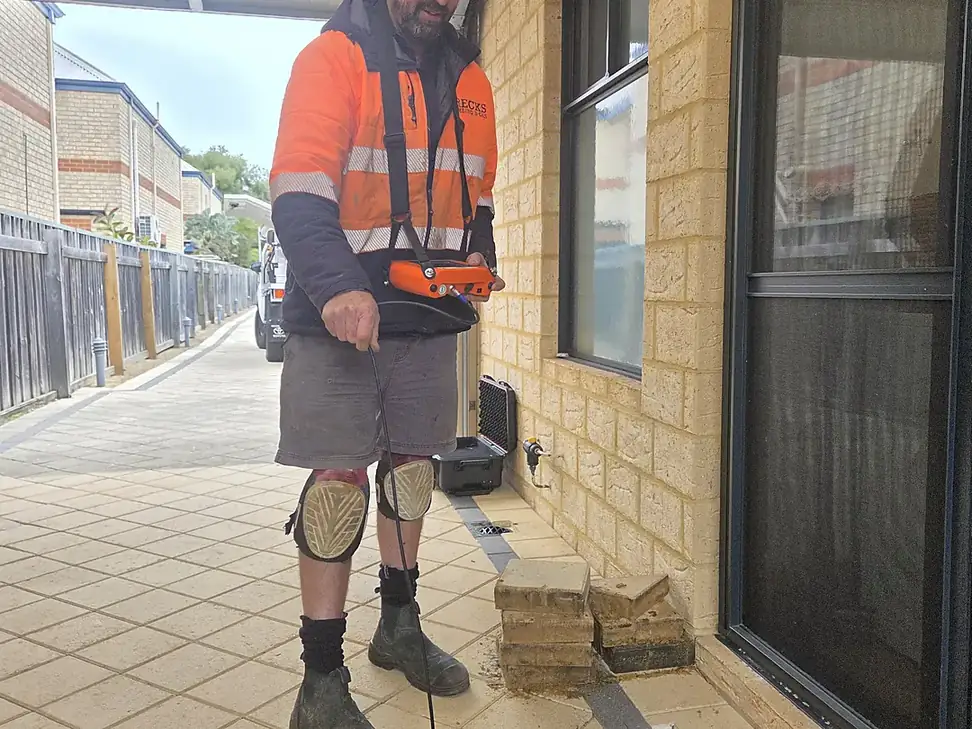
Once the leak is found, the next question is whether to repair that spot or replace a longer run of the old copper. Ben talks that through with you, and you decide what suits your budget.
Replacement is often the better long-term option if the pipe is old and you have already had a few leaks, because the next pinhole may not be far behind. That is not always possible. If the pipe runs under a slab or through an area that cannot reasonably be opened up, a repair may be the only practical option. Where replacement is viable, that is usually what Ben will discuss. Either way, you get a clear explanation of the options and a price before work starts.
Frequently asked questions
No. Soft water and chlorine can be a factor, but plenty of copper still lasts a long time. A single leak is often just that. Several leaks on the same line is when it is worth looking at the whole run.
It depends on where the pipe is, how many leaks you have already had, and your budget. Ben will find the leak, talk you through both options, and you decide. Under a slab or in a spot that cannot reasonably be opened up, a repair is often the way to go.
Yes. The Sewerin ultrasonic equipment is used to pinpoint the leak first, so any opening up is targeted rather than exploratory.
Yes. We are based in Kwinana and work these suburbs all the time. If you think you have a leak, call Ben at Frecks Plumbing & Gas on 0409 685 414.
Sources
- Water Corporation: Perth Seawater Desalination Plant, Kwinana
- Water Corporation: Southern Seawater Desalination Plant, Binningup
- Water Corporation: How desalination works, including post-treatment
- Water Corporation: Drinking water quality, including chlorination
- Water Corporation Annual Report 2026, metropolitan water sourced (p. 72)
- Water Corporation Drinking Water Quality Annual Report 2024-25
- Water Corporation: Perth region aesthetic water quality tables, 2024-25
- Water Corporation: How to detect a leak
- Australian Drinking Water Guidelines: water quality beyond the meter
- Australian Drinking Water Guidelines: copper
- Australian Drinking Water Guidelines: pH
- Sarver and Edwards, Inhibition of Copper Pitting Corrosion in Aggressive Potable Waters, 2012
- Adeloju and Hughes, The corrosion of copper pipes in high chloride-low carbonate mains water, 1986